A camera survey shows the inside of the accessible pipe at the time inspected, not the whole condition of the surrounding ground.
What is happening?
A camera survey shows the inside of the accessible pipe at the time inspected, not the whole condition of the surrounding ground. Dirty water, poor access, branch connections and unclear footage can limit what the operator sees. These signs deserve investigation, but a symptom on its own cannot establish that a pipe is collapsed or needs replacement.
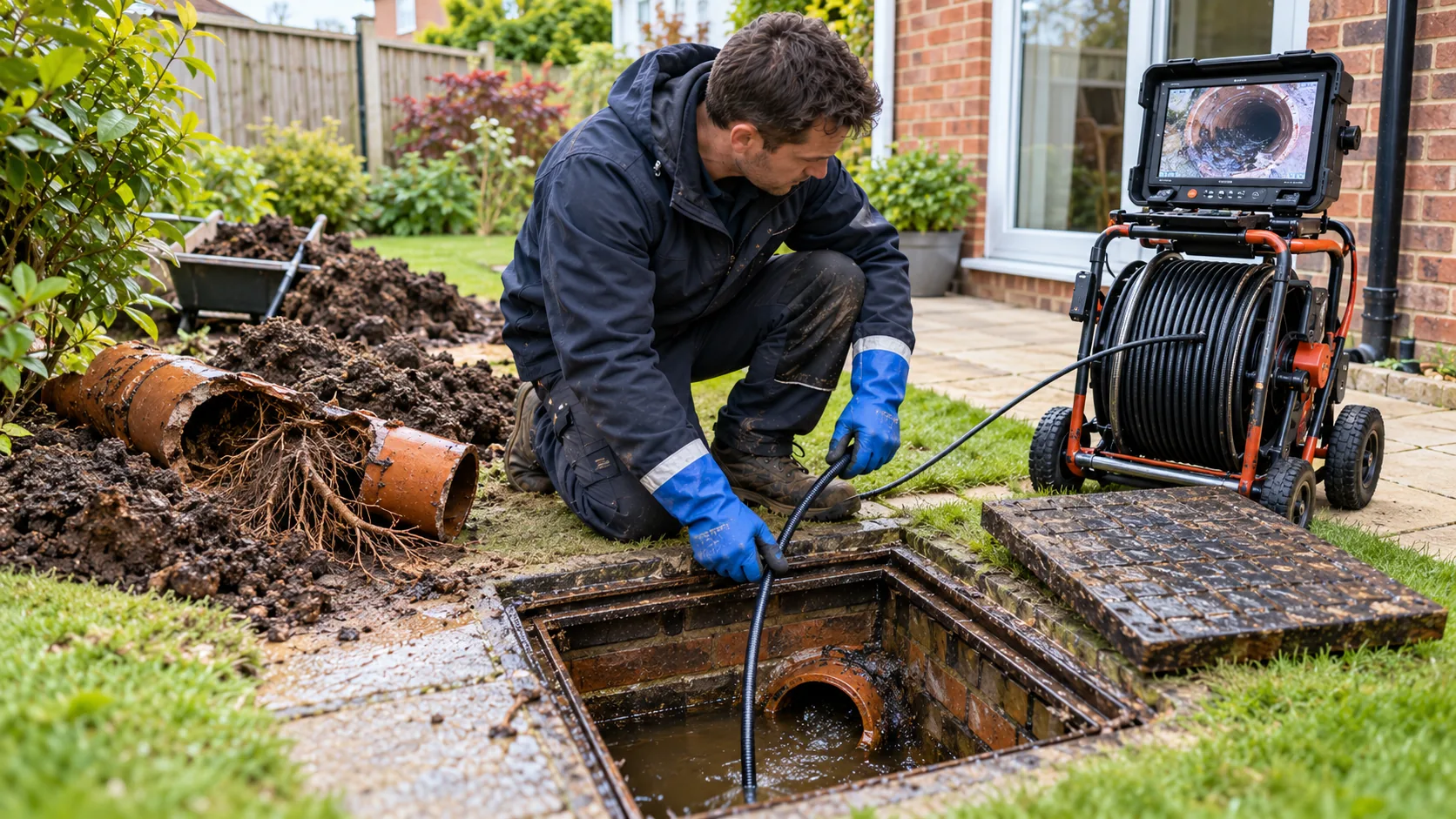
What to look for
Ask whether the entire relevant run was surveyed and whether the camera could pass the suspected location. Try to note the sequence of events rather than repeatedly testing a system that may overflow. Which appliance was used, where did water appear and how long did it take to clear? Such details help narrow the possible route of the fault.
Understanding the pattern
Dirty water, poor access, branch connections and unclear footage can limit what the operator sees. Several different faults can cause similar symptoms. A useful diagnosis should explain which observations support it and what evidence would rule out alternatives. Photographs and a brief record of when the problem occurs can be useful to the person investigating it.
Could there be another explanation?
Dirty water, poor access, branch connections and unclear footage can limit what the operator sees. A problem may be local to a fitting, outside gully or branch pipe rather than a main underground sewer. Contractors should establish which part is affected before recommending extensive work.
What should happen during an investigation?
Request a clear report, relevant footage and any recommended further test with reasons. The right investigation depends on access and symptoms. It may begin with checking visible traps, connections and chamber levels; where an underground problem is suspected, a CCTV survey may be useful. Ask to see the evidence of any serious defect.
Who is responsible for the drain?
In England and Wales, private drains that serve only one property within its boundary are usually the responsibility of its owner or landlord. Many shared sewers and lateral drains outside the property boundary are the sewerage company’s responsibility. Before paying for private work on a shared line, check ownership. Different arrangements apply elsewhere in the UK.
Before accepting a repair quotation
Ask what exactly needs doing and why, where the defect is located and how it has been confirmed. Get a written price that separates clearance, inspection and repair, including any reinstatement. A recommended excavation, lining or major replacement should be backed by the observed defect, not simply by the existence of a blockage.
Related reading: sewage coming up through the shower, outside drain overflowing, toilet gurgling. See also what a CCTV drain survey can reveal.
For sewer ownership in England and Wales, see Ofwat’s drainage and sewer information. For sewage flooding concerns and complaints, see CCW.
Find a local drainage contractor
If the issue is on a privately maintained drain, you can request quotations through MyJobQuote. Explain the symptoms and any previous work, and check prices and scope before agreeing to repairs.